Color Psychology in Web Design: Choosing Palettes That Drive Action
A client called us once, genuinely frustrated. His website had been live for four months. Good traffic, decent SEO, a service people actually needed — and almost zero enquiries. We went through the usual checklist. Copy was fine. Layout was fine. Loading speed, fine.
Then we looked at the color scheme.
He'd gone with a deep crimson background, dark grey text, and a black header. The whole thing looked like a Halloween invite. He sold accounting software.
We changed the palette in a week. Enquiries picked up within the month. Same website, same offer, same traffic. Just different colors.
We Know That Sounds Too Simple
And honestly, we get the skepticism. Colors changing business outcomes feels like the kind of thing a design agency puts in a pitch deck to sound clever. But there's actual science underneath it, and once you understand what's happening, you can't unsee it on websites.
Your brain starts forming an emotional response to a page before you've read anything on it. We're talking fractions of a second. By the time your eyes have found the headline, your nervous system has already filed the page under "feels legit" or "something's off." Color is doing a huge chunk of that filing.
So when that accounting software site was dressed in crimson and black — colors the brain associates with urgency, aggression, maybe danger — visitors were getting a subconscious signal that contradicted everything the brand was trying to say. The mismatch created friction. Friction killed conversions.
What Each Color is Quietly Whispering to Your Visitors
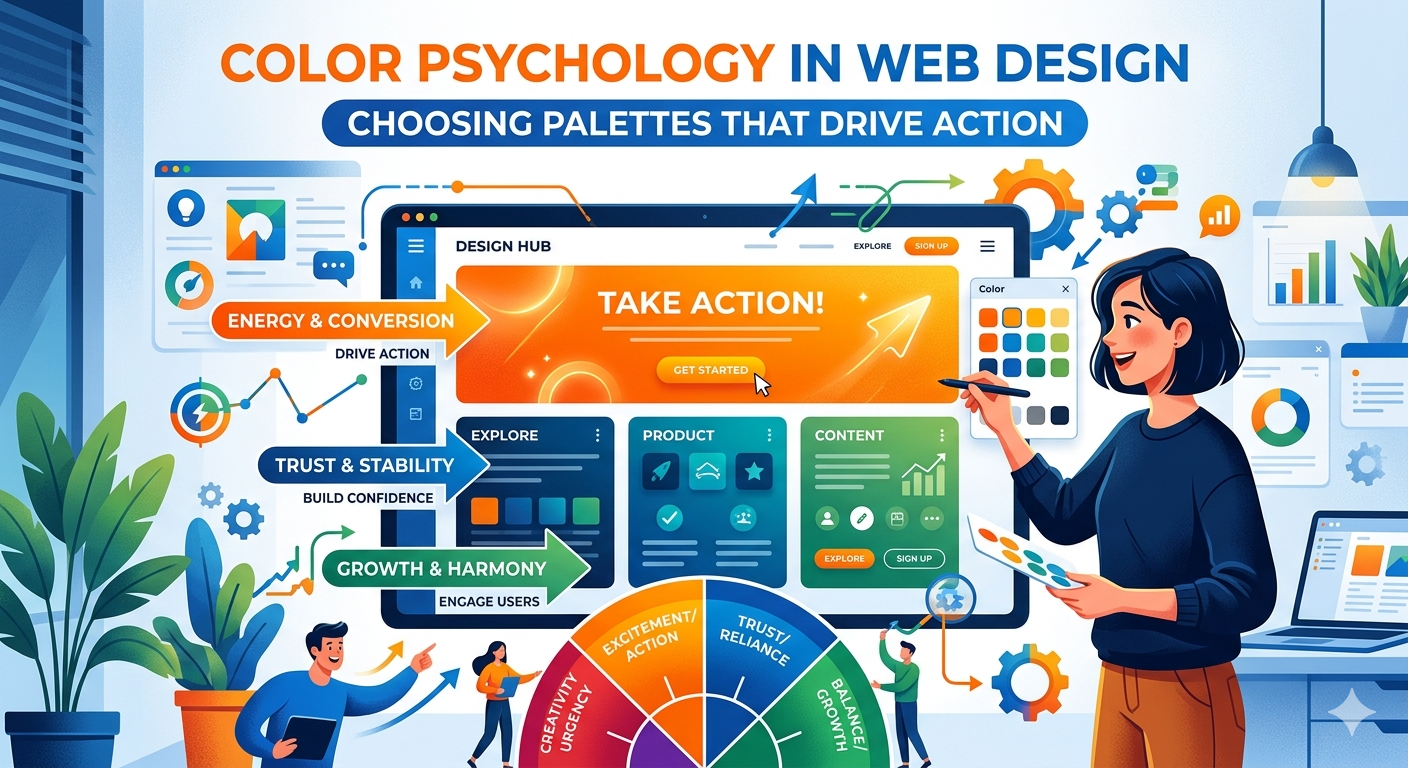
Blue is the big one. Overused, yes — but overused because it works. It communicates stability, competence, calm. If your business needs people to hand over money or personal information, blue reduces the internal resistance that stops them. That's why every bank you've ever used has blue somewhere prominent.
Orange is underestimated. People think it's loud or cheap, but used well it's one of the highest-converting CTA colors out there. It's warm, it's energetic, and it doesn't carry the alarm-bell connotations that red sometimes does. A well-placed orange button on a neutral background is hard to ignore.
Green means go — literally, at a neurological level. It's also tied to health, growth, money, nature. The interesting thing about green is how versatile it is depending on the shade. A dark forest green feels premium and calm. A bright lime green feels youthful and energetic. Same color family, totally different signals.
Red is the one people most often get wrong. It creates urgency, which is useful — but urgency isn't always what you want. Red on a sale banner? Great. Red as your primary brand color when you're trying to seem trustworthy and approachable? Reconsider.
White and negative space aren't colors people think about much, but they're doing a lot of work. Crowded, color-heavy designs feel overwhelming. Brands that want to signal quality and confidence often just... breathe more. Less color, more space.
This Plays Out Differently in India Than the West
Something that doesn't come up enough in global design conversations — color associations aren't universal. They're partly cultural, and that matters enormously when you're designing for a specific market.
Any good website designing company in Bhopal is going to think about this. Saffron, white, and green mean something specific here that they don't mean in, say, Toronto. Red is auspicious at a wedding but alarming on a medical website. Yellow is sacred in some contexts and cautionary in others.
Businesses that invest in web design in Bhopal and just copy-paste Western design trends without thinking about who's actually looking at the screen are leaving something important on the table. Local nuance isn't a small detail — it's often the difference between a palette that connects and one that just sits there looking nice.
The Actual Process of Picking Colors (Without Losing Your Mind)
Start with your audience, not your taste. What does trust look like to them? What does premium look like to them? What makes them slow down instead of bounce?
Pick one dominant color that answers those questions. Then one secondary color that complements it without fighting for attention. Then one accent — and this is the important one — that goes on every button, every link, every place you want someone to actually do something.
Three colors. One job each. That's genuinely all you need to start.
Test it on people who don't work in design. Not "does this look good" — that's the wrong question. Ask them how it makes them feel. If they say something close to what your brand is trying to communicate, you're on the right track. If they shrug or say "professional, I guess," keep working.
Color is one of those things that nobody notices when it's done right. Which is exactly the point.